LROC captures surface of the Moon
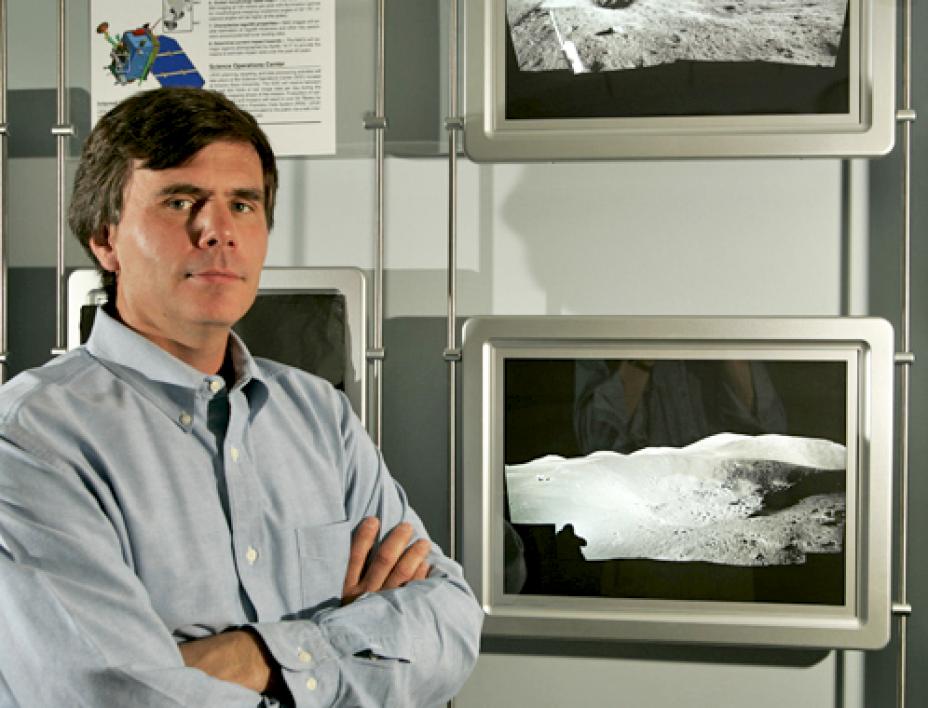
Mark Robinson, a professor in the ASU School of Earth and Space Exploration, is the principal investigator for the Lunar Reconnaissance Orbiter Camera (LROC) – the imaging system aboard NASA’s Lunar Reconnaissance Orbiter (LRO). The LRO, which launched June 18, is the first in a series of robotic missions to the Moon.
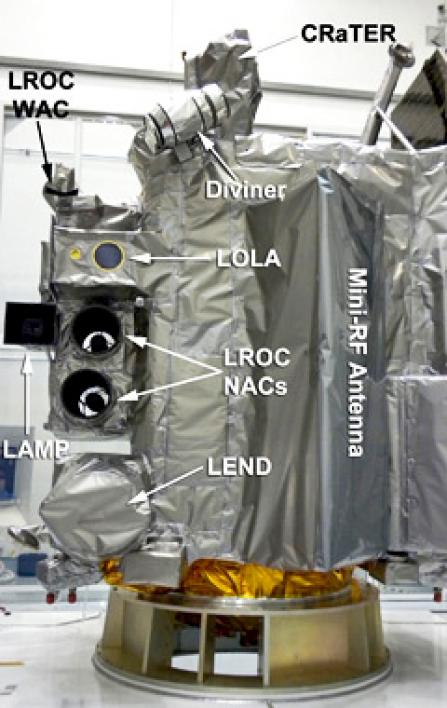
The LRO is seen in the final stages of its preparation at the Astrotech facility.
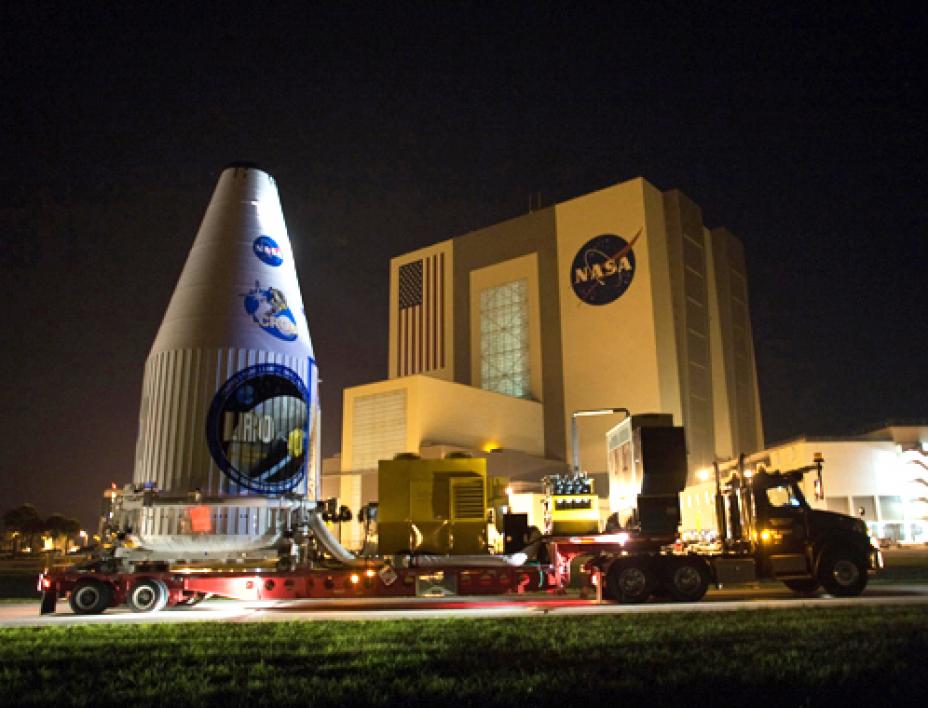
The LRO is transported before its launch. According to ASU professor Mark Robinson, the LRO mission is designed to let us make intelligent decisions on where it's safe to land humans on the moon in 2018.

The Atlas V, carrying the LRO and LCROSS spacecraft, launches off from the Cape Canaveral Air Force Station.
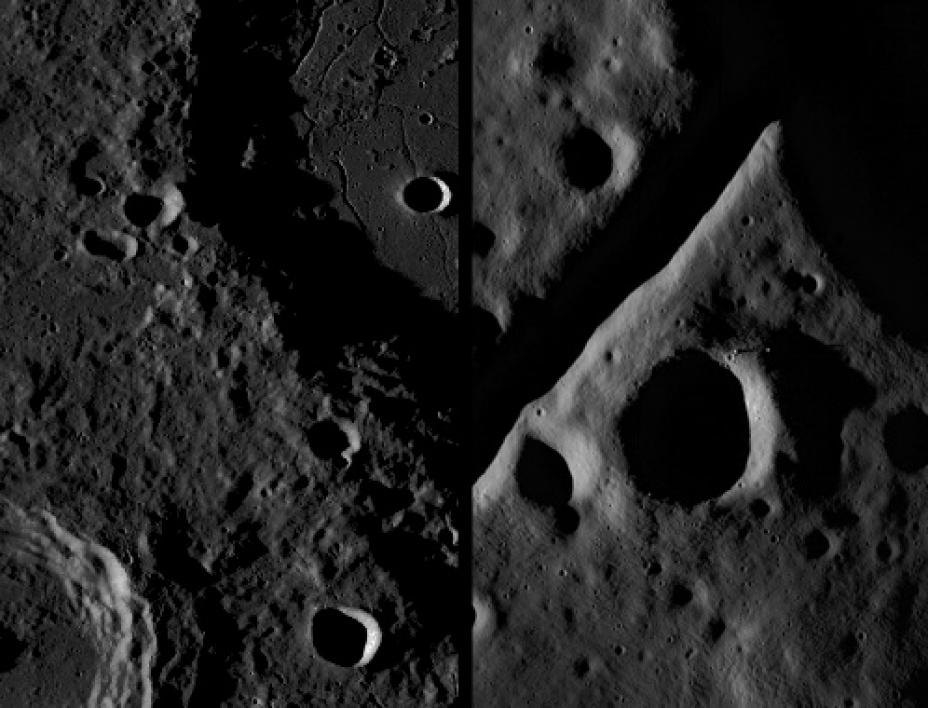
The LROC consists of a Wide Angle Camera and two Narrow Angle Cameras. The Wide Angle Camera provides images in seven color bands over a 60-kilometer swath. The Narrow Angle Cameras provide high-resolution, black-and-white images. Left: A mosaic of a floor-fractured crater, acquired by the Wide Angle Camera. Right: The central peak and fractured floor of Compton crater, as imaged by the Narrow Angle Camera.
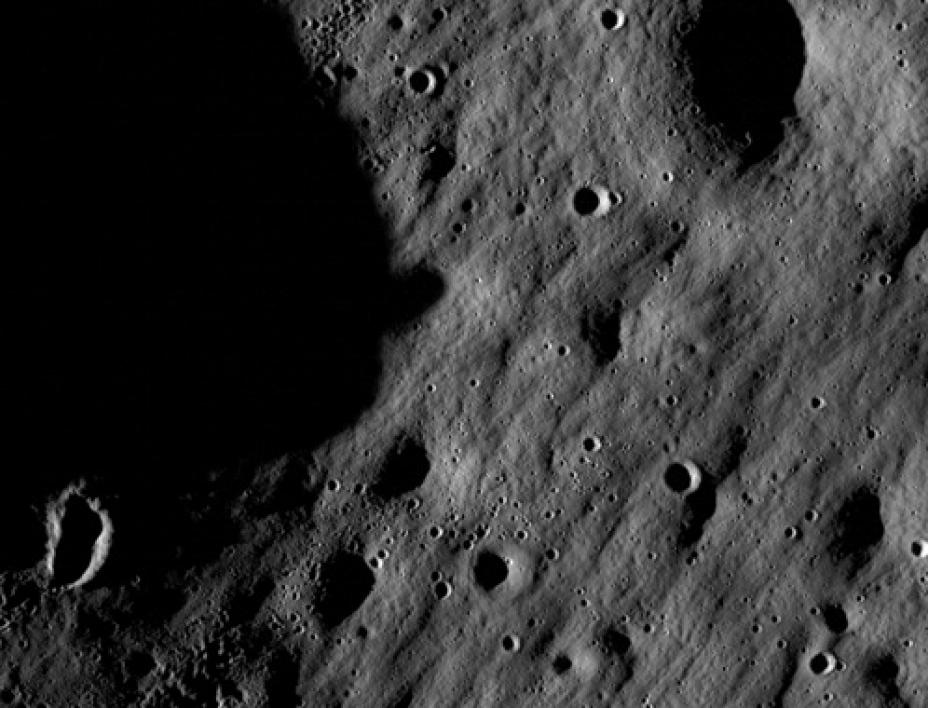
One of the first images taken by the LROC’s Narrow Angle Camera shows full resolution detail of the Moon. The older craters appear subdued, while younger craters are crisp and sharp.
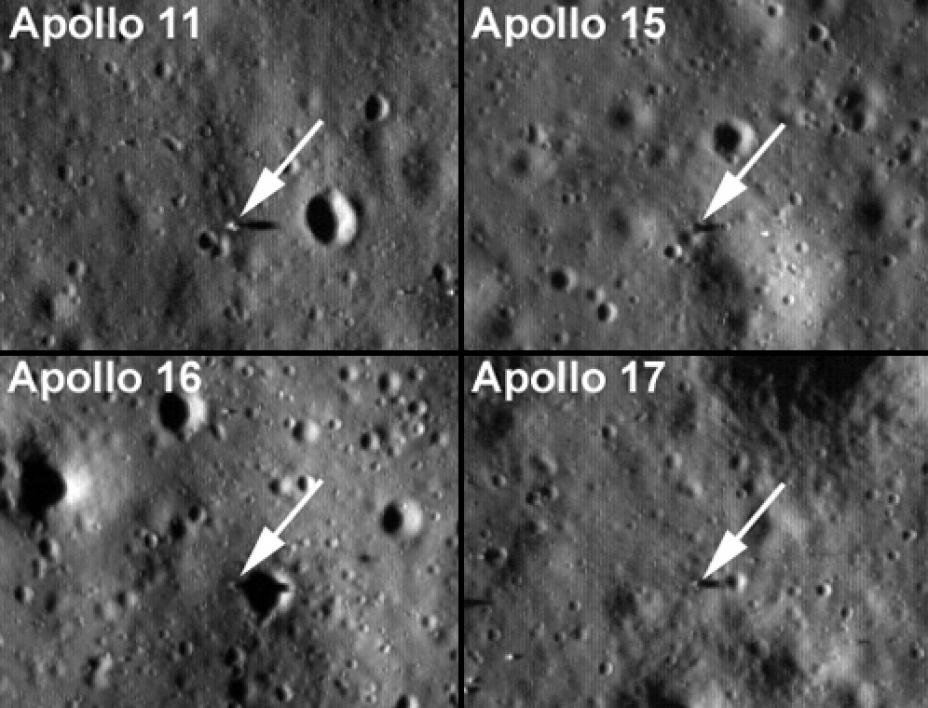
Four of the six Apollo landing sites, as captured by the LROC’s narrow angle cameras. The images were taken within days of the 40th anniversary of the Apollo 11 mission.
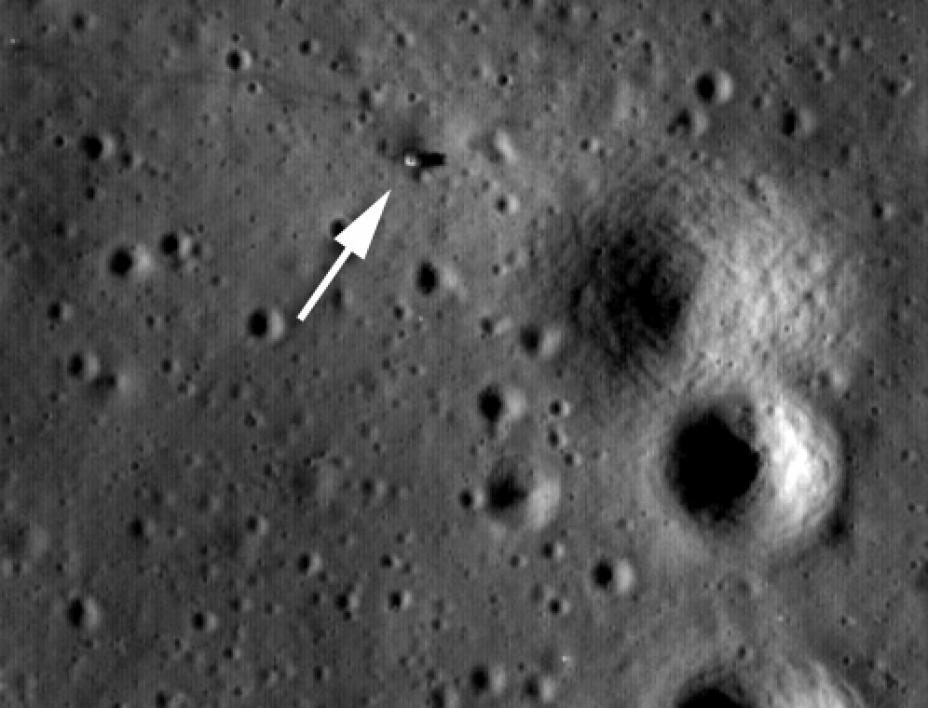
The Apollo 14 lunar module, Antares, can be seen in this image taken by the LROC.
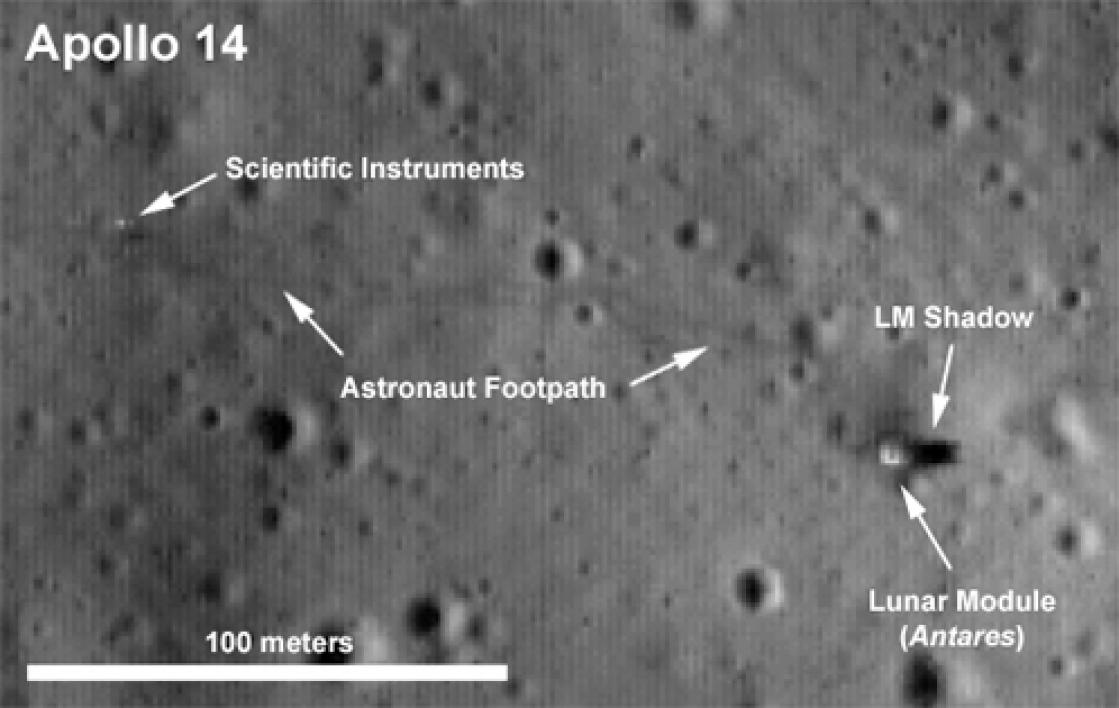
A close-up of the Apollo 14 landing site reveals not only the lunar module, but astronaut footprints, instruments and more.